PMPA Craftsman Cribsheet #147: 2025 Year End Regulatory Update

A roundup of regulations and proposed rules from Washington D.C. in 2025. PMPA actively lobbies through its PAC and made changes on issues like bonus deprecation, Section 179 expensing and domestic R&D.

Published January 1, 2026

By David Wynn, Director of Technical Services & Industry Affairs

Download/View Cribsheet


Proposed OSHA Indoor Heat Rule. Hearings concluded on July 2, 2025 and post hearing comment period closed October 30, 2025. PMPA testified before the committee and submitted post hearing comments. The Heat Rule as proposed would put significant burden on shops to comply (including loss of capacity) especially shops in the South where ambient temperatures are often above 80º F even in air-conditioned shops.

Final Rule Modifying the HCS. Updates to Hazard Communication Standard to align with revision 7 of the Globally Harmonized system of Classification or GHS. Final rule was effective July 19, 2024. Starting in July of 2026, employers will be expected to update workplace labels, hazard communications programs and training as necessary to comply with the 2024 update.

OSHA NEP (National Emphasis Program) on Amputations in Manufacturing Industries. Our NAICS Code, 332721 Precision Turned Product Manufacturing, is listed in Appendix B of the NEP, which allows for unprogrammed inspections of facilities. Greater emphasis on Machinery and Machine Guarding, 29 CFR Part 1910, Subpart O and The Control of Hazardous Energy (Lockout/Tagout), 29 CFR 1910.147.

EPA Trichloroethylene (TCE) Restrictions. Prohibited after September 15, 2025 for industrial and commercial use. Vapor degreasing use prohibited after December 18, 2025 except for uses listed in 40 CFR § 751.305(b)(7). 

EPA Perchloroethylene (PCE) Restrictions. PCE prohibited for industrial or commercial use after June 7, 2027. Some continued use where no safe alternative exists. Extensive record-keeping requirements for continued use. 40 CFR Part 751, subpart G.


Positive Changes

OSHA Deregulatory Rulemaking. OSHA asked for public comment in September 2025 on proposed deregulatory package that moves to modernize and streamline regulations to allow more flexibility in compliance across industries. (Included: Interpretation of the General Duty Clause, Lead, Occupational Injury and illness Recording and Reporting Requirements — withdrawal of addition of column for musculoskeletal disorders).

Permanent 100% Bonus Depreciation. New 2025 tax legislation permanently reinstates 100% bonus depreciation for all qualified assets placed in service after January 19, 2025. This provides significant tax savings opportunities for manufacturers investing in new machinery and equipment. This has been a top priority for PMPA in Washington.

Expanded Section 179 Expensing. The cap for Section 179 deductions increased to $2.5 million, with the phase-out beginning at $4 million, more than double the previous limits.

Domestic R&D Expensing. Research and development costs for domestic activities are now fully deductible in the year incurred, replacing a prior five-year amortization requirement.

Buy America Requirements. For Federal-aid transportation projects, a new Federal Highway Administration (FHWA) rule will require that final assembly of manufactured products occurs in the U.S. and that domestic components constitute more than 55% of the total cost, effective October 1, 2025.

Bottom Line

Working with our Inside Beltway team in Washington D.C. helps PMPA to stay focused and act on developing tax and regulatory issues that can impact your shop. PMPA actively lobbies through our PAC and made real changes on issues like bonus deprecation, Section 179 expensing and domestic R&D. PMPA members with any questions about the PAC or our regulatory efforts please contact David Wynn at dwynn@pmpa.org.



Author

David Wynn

David Wynn, MBA, is the PMPA Director of Technical Services & Industry Affairs with over 20 years of experience in the areas of manufacturing, quality, ownership, IT and economics. Email: dwynn@pmpa.org — Website: pmpa.org.

Key Takeaways from the PMPA 2025 Annual Meeting

Discover how the PMPA 2025 Annual Meeting elevated the industry through high-impact networking and expert insights.

by David Wynn

Director of Technical Services & Industry Affairs, PMPA

Published December 1, 2025

Download Magazine Article


The 92nd PMPA 2025 Annual Meeting brought together leaders and innovators from the precision machining industry for a dynamic weekend of connection, learning and inspiration. From high-impact networking events to expert-led sessions on business strategy, contract law, government affairs and the future of AI, attendees gained actionable insights and forged relationships that will help their businesses thrive. This year’s meeting truly elevated the industry, setting the stage for continued growth and collaboration among PMPA members.

Avish Parashar — who wrote the book “Say ‘Yes, And!’: 2 Little Words That Will Transform Your Career, Organization and Life” — kicked off the business sessions. Avish was an improvisational comic who learned that techniques in the fast-paced world of unscripted comedy are useful in business and life. Avish kept us on our toes and illustrated using “Yes, And!” in a practical way to improve our businesses. 

Jonathan Jorissen enlightened attendees with key items to review in business contracts. He provided insights about UCC superseding certain contract language to understand how duration can affect your contracts. Even understanding how jurisdictions can affect negotiations because contract case law can change from state-to-state. Jonathan had an open discussion during his session and was also available for questions helping members solving real world problems.

After Jonathan, Omar Nashashibi from Inside Beltway, our retained lobbyist in Washington D.C., shared fact after fact on current events. Everything from the political climate to regulations to the latest information on tariffs. In case you missed this session, PMPA members have access to a live monthly webinar with updates from Omar. As part of our mission, PMPA is devoted to advocacy for our industry and provides a voice in Washington on key issues facing the precision machining industry.

Gene Marks shared his expertise about strategic moves which was filled with entertainment and a notebook’s worth of takeaways. Gene is an author who wrote six books on business management. He also is a columnist for numerous periodicals including The New York Times, Forbes, Washington Post, Inc. Magazine and more. Gene is also a certified public accountant helping businesses solve problems every day.

On day three, Jim Camp Jr. from Camp Negotiation Systems spoke on leadership. Jim is a retired Major General of the United States Air Force where he put his leadership ideas to the test. Jim helped our members understand negotiations from their unique perspective. His session was packed with ideas and tactics to aid our shops during tough negotiations. Breaking down what the rest of the world thinks and how a negotiation should proceed, Jim brought an understanding to the group to maximize the potential for the best deal.

The final speaker was Geoff Marsh, managing partner at Amend Consulting, who delved into how AI is now and will affect our businesses. Geoff explained AI as a tool and gave realistic expectations as to how AI affects manufacturing.

The meeting ended with our annual awards banquet. The awards banquet is where we recognize members for outstanding achievement in our association and the PMPA Board of Directors welcomes the new president. 

One of the biggest advantages of being a PMPA member is networking. The connections you make at PMPA events can turn into friendships that last a lifetime. The annual meeting is a great place for owners and upper management to catch up and talk about high-level issues in their businesses.

PMPA has two other meetings dedicated towards different audiences so that there is something for everyone at PMPA. Management Update is beneficial for managers and the team that manages day-to-day operations. The National Technical Conference (NTC) is designed to upskill shopfloor performers and focuses on the challenges that happen on the shop floor every day. PMPA members have so many benefits to help improve their businesses and the most impactful is that we are truly Better Together.


Author

David Wynn is the PMPA Director of Technical Services & Industry Affairs with over 20 years of experience in the areas of manufacturing, quality, ownership, IT and economics. Email David


It’s a Moving Experience, Part 1

Moving after 75 years: Lessons from W.H. Bagshaw’s big leap.

by Carli Kistler-Miller

Director of Programs & Marketing | President of the Educational Foundation, PMPA

Published December 1, 2025

Download Magazine Article


After 75 years in the same Nashua, New Hampshire building, W.H. Bagshaw decided it was time for a change — a move both bold and strategic. Vice President Adria Bagshaw shared how the family-run company prepared for the transition, offering practical lessons for any manufacturer facing a major move.

Start With the Numbers
Adria, along with her husband and W.H. Bagshaw President, Aaron Bagshaw, began by taking a close look at the company’s finances — literally line by line. Adria says, “I dumped our income statement into an Excel spreadsheet and went through it with the team.” The goal was to see how each expense might change in a new facility. That exercise revealed both short-term costs and long-term savings. “We knew our old building needed a new roof and boiler,” she explains. “So, while the move was expensive, it was the right strategic decision.”

Shop Around, Even If You Love Your Bank
The company sold its long-time building and took on a larger mortgage. Adria’s advice: Never assume loyalty equals the best deal. “We loved our bank,” she says, “but we still shopped the loan. Because of that pressure, they gave us a much better rate.” W.H. Bagshaw also secured participation from the state’s Business Finance Authority, saving tens of thousands in early interest.

Visit Other Shops
Before finalizing plans, the W.H. Bagshaw team visited other manufacturers to learn from their experiences. Fellow PMPA member Reader Precision in Elkhorn, Wisconsin, opened its doors to the Bagshaws to share its moving expereience. There was one hot topic: floors. “Everyone had a different opinion — polished concrete or epoxy,” Adria shares. “We went with epoxy. It wasn’t cheap, but it was the right fit for us.” 

Use Your Own Resources
W.H. Bagshaw turned inward for help. A young machinist with architectural training designed the plant layout, which saved time and money. “He was proud, and the team loved being part of the process,” says Adria. Employees also worked overtime on weekends to clean, paint and set up the new facility, reinforcing the company’s culture of ownership.

Keep Everyone Involved
To make sure no detail was overlooked, the layout was printed large and posted in the shop. “We gave everyone sticky notes to add suggestions,” Adria says. “The people using the space caught things we might have missed.”
Moving after three-quarters of a century wasn’t easy, but for W.H. Bagshaw, it was energizing. As Adria puts it: “When your whole team helps build the future, the move isn’t just physical, it’s transformational.”


Author

Carli Kistler-Miller, MBA has over 25 years of experience with operations, event/meeting planning, marketing, writing and communications.
Email: cmiller@pmpa.org — Website: pmpa.org.

ICYMI- In Case You Missed It

by Joe Jackson

Director of Communications & Events, PMPA

Published December 1, 2025

Download Magazine Article


New Members

  • Continuous Process Improvement Systems
  • Machine Incorporated
  • Tancredi Machining
  • Star Machine LLC


Past Events

  • PMPA Annual Meeting 2025


  • PMPA Educational Foundation Golf Outing


Upcoming Events

  • December 3 | PMPA Northern Ohio Chapter President’s Round Table / Holiday Social:
    Cleveland, OH

Speaking Of Precision Podcasts

  • Talking Business Part 10 with John Detterbeck
  • Resin Printing for the Shop
  • From Defining to Preventing Errors
  • Updates from Washington D.C.


Committees

PMPA’s Quality Committee met at Horn USA in Franklin, TN to start planning
their sessions for National Technical Conference 2026 (May 3-5 in Toledo, OH.)


ListServe Communities Topics

Have a specific question or challenge? PMPA’s ListServes — Technical, Quality, HR, IT, and Corporate — let you tap into the right community of peers who’ve been there, solved that! Here are the top five conversations in the Listserve Community last month:

  • Technical : Matrix Clutch ZC45: Member looking for replacement clutch parts.
  • Technical : Molding Material For ID
    Features: Member looking for molding material to check internal features on parts.
  • Technical : Certification IS00906633 Heat Treatment: Member looking for help understanding Heat Treat specs.
  • Technical : Nadcap fluoropolymer coating: Member looking for NADCAP heat treatment services in/near Texas.
  • Technical : Member looking for a rod bending/forming company
  • IT: Industry 4.0: Members sharing information on Industry 4.0 for Small and Medium Machine Shops


Interested in Membership?
Email Harry Centa at hcenta@pmpa.org


Author

Joe Jackson

Director of Communications & Events, PMPA

Email: jjackson@pmpa.org — Website: pmpa.org.

PMPA Craftsman Cribsheet #146: Powder Bed Printing for the Shop

Published December1, 2025

By David Wynn, Director of Technical Services & Industry Affairs

Download/View Cribsheet

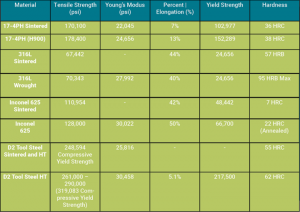
Powder bed printing has been around for a while but has typically been available for high-end printers. The raw material is a powder which is fused together with heat or a chemical binder. In general, parts must be post processed to complete the part. Typically, loosely bound material (green-highlighted section) will be heat-treated and washed to reach the finished condition. Metal can be printed using this method. Prints can also be hollow like fused deposition modeling (FDM). Tolerances ±0.015 inch can be achieved, but dimensional change during heat treatment can make tight tolerances challenging.


*All data presented in the image above is for reference. Mechanical properties can vary based on raw material used, 3D printer specifications and heat-treat postprocessing — presented as a general guideline to the above materials. Items in green are for comparison to standard materials.


Author

David Wynn

David Wynn, MBA, is the PMPA Director of Technical Services & Industry Affairs with over 20 years of experience in the areas of manufacturing, quality, ownership, IT and economics. Email: dwynn@pmpa.org — Website: pmpa.org.



The November 2025 ITR Economics report has been released. The ITR Economics quarterly forecast report gives us insight into eight industries that are the primary drivers of our shops’ success. The ability to consistently look into the future with actionable data gives us a competitive edge.  The reason that PMPA members closely follow the ITR Quarterly forecast report is that the ITR process of analysis clarifies and makes patterns clear that the news cycle seems to miss.  The November report shows recovery is coming. “The biggest bang for your buck this cycle will be to focus on improving your company efficiencies.”  Check out in this month’s PMPA November 2025 Economic Report from ITR Economics.

View/Download


The Institute for Trend Research (ITR) quarterly reports focus on major areas of economic growth and decline in key market segments for the Precision Machined Products Industry. They are provided to PMPA members as part of the association’s overall business intelligence program and are used as a management tool to help PMPA members plan for what lies ahead and which markets they should focus on in a complex manufacturing environment. 

Toledo, Ohio
Glass City Center
May 3 – May 5, 2026


Registration Includes

Access to all NTC sessions
Saturday Welcome Reception
Sunday Lunch & Keynote Speaker
 Sunday Technical Member Exhibit Tables – Reception
Monday Breakfast
Monday Lunch & Awards Banquet
Monday Reception
Tuesday Breakfast

Registration Fees:

These fees are available through 05/02/2026

 
Name Price Available To
NTC- First Attendee Early Bird (vaild until 3/31) $550.00   All Members
NTC- Additional Attendee Early Bird (vaild until 3/31) $375.00   All Members
NTC- First Attendee + Exhibit Fee Early Bird (vaild until 3/31) $950.00   All Members
NTC – First Attendee Fee $600.00   All Members
NTC Additional Attendee Fee $425.00   All Members
NTC First Attendee + Exhibit Fee $1,000.00   All Members

National Technical Conference 

Hilton Homewood Suites Hotel Reservations  Hilton Garden Inn Hotel Reservations

Both hotels are attached to the Glass City Center

ICYMI- In Case You Missed It

by Joe Jackson

Director of Communications & Events, PMPA

Published November 1, 2025

Download Magazine Article


New Members

  • CCI Industries Sales
  • Ultra-Form Mfg. 2001 Inc.
  • Northern Indiana Axle
  • Acacia Machining
  • NMC Inc.


Past Events

  • PMPA Illinois Chapter Golf Outing


  • PMPA Eastern New England Chapter: Presidents Round Table


  • PMPA Canada Chapter: Thread Rolling


  • PMPA Wisconsin Chapter Golf Outing


  • PMPA Western Michigan Chapter: Trap Shooting Challenge


  • PMPA Connecticut Chapter: Presidents Round Table


Upcoming Events

  • November 4 | PMPA Illinois Chapter Dale Carnegie Workshop: Communication with Different Personality Styles
    Downers Grove, IL

Speaking Of Precision Podcasts

  • Talking Business Part 8 with John Detterbeck
  • FDM Printing for the Shop
  • Errors of Commission vs Omission
  • The Gen Z Effect: Transforming Manufacturing Towards the Future


Committees

PMPA’s Technical Programs Committee met at Shamrock Precision’s amazing facilities in Dallas, TX to continue planning National Technical Conference 2026 at the Glass City Center in Toledo, OH, May 3-5. With 41 sessions focused on precision machining PLUS the Technical Member Table Exhibits, it’s going to be a can’t miss event!


ListServe Communities Topics

Have a specific question or challenge? PMPA’s ListServes — Technical, Quality, HR, IT, and Corporate — let you tap into the right community of peers who’ve been there, solved that! Here are the top five conversations in the Listserve Community last month:

  • Technical : Members looking for special material sourcing
  • Technical : Discussion on CBAM deminimus exemption being approved by the European Parliament
  • Corporate : Tariff Impacts on our shops in various different capacities
  • Technical : Black Anodize
  • Technical : Member looking for a rod bending/forming company
  • Technical: Members looking for fall color adventure spots


Interested in Membership?
Email Harry Centa at hcenta@pmpa.org


Author

Joe Jackson

Director of Communications & Events, PMPA

Email: jjackson@pmpa.org — Website: pmpa.org.

PMPA Craftsman Cribsheet #145: Resin Printing for the Shop

Published November 1, 2025

By David Wynn, Director of Technical Services & Industry Affairs

Download/View Cribsheet

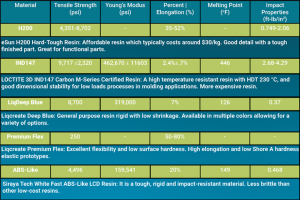
Resin printing is typically a plate dipped into a vat of photosensitive liquid that is printed one layer at a time from the bottom up. Prints are printed upside down. The build plate is lowered from above to the bottom of the resin tank. Each whole layer of is printed almost instantly. Layers are typically smaller than fused deposition modeling (FDM) but often a comparable part will print faster with resin than FDM. Layers print at the same time whether printing a small object or a full build plate. Build plates can be filled with multiple items for a faster effective cycle time. Surface finish and part tolerances are improved with resin typically holding tolerances of around ±0.005″. Resins are a developing field and are presented as unique manufactured products. 

*All data presented in the graph above is for reference. It is based directly on data provided from various manufacturers for their products. Colors within a resin family can affect mechanical properties. Presented as a general guideline to the above materials. 


Author

David Wynn

David Wynn, MBA, is the PMPA Director of Technical Services & Industry Affairs with over 20 years of experience in the areas of manufacturing, quality, ownership, IT and economics. Email: dwynn@pmpa.org — Website: pmpa.org.

From Defining to Preventing Errors

Preventing error is key to shipping good parts every time.

by David Wynn

Director of Technical Services & Industry Affairs, PMPA

Published November 1, 2025

Download Magazine Article


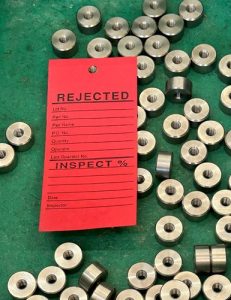
The past couple of months, we have discussed ways to define errors that are outside the realm of normal shop conversation. We tend to know what an error is after it happens, but having a deeper understanding of types of errors will help us design processes that prevent errors. Preventing error is key for long term sustainability and improvement. 

Four techniques to have in your toolbox for preventing error are process thinking, statistical process control (SPC), poka-yoke (mistake proofing) and redundant systems. When preventing errors, we need to look for leading indicators to catch errors before they happen. Depending on trailing indicators is like performing an autopsy. The non-conforming condition has occurred, and a damage assessment is being performed. To minimize cost and maximize improvements performing tests while the process is still happening to prove its fitness and prevent failure. The goal is to never reach a non-conforming condition. 


Process Thinking

The best way to prevent error is to have a process. What is a process? A process is a series of steps that are performed to reach a particular end state. Processes are everywhere. We often recognize them in our own life. We have a process for starting the coffee maker in the morning. It is a series of identical steps that have little variation. If there is no process, then there is nothing to control. Once we build a process it must be consistent. In order to move to higher level error prevention and detection a consistent process is imperative. One way to improve consistency is to document a process. In manufacturing where multiple people will complete a process, it must be documented. Documented processes make sure everyone is on literally the same page doing the steps the same way every time. Providing consistency across multiple people, shifts and days creates a stable process that can be tracked.

SPC

Once we have a stable process, we can utilize tools like statistical process control or SPC to track variation within the process. SPC makes variation visible to everyone. When variation is visible, problems can be detected and corrected before non-conforming parts are made. Utilizing a control chart, an operator can easily see dimensional drift moving toward the upper control limit for instance. When dimensional drift appears on multiple dimensions it might be determined that a form tool is wearing. Tracking the statistically relevant change creates opportunities for continuous improvement. In the Plan Do Check Act (PDCA) cycle, SPC is in the check phase. The process has been created and is running so checks are performed to verify process stability. Once change has been detected, the process can be adjusted to minimize occurrence of the change. 


Poka-Yokes

Poka-yokes are systems that prevent mistakes from occurring.  Mistakes and non-conforming conditions are synonymous. For poka-yokes to be effective, they need to be automated. Building training and operator lead work stoppages are not true poka-yokes because the human element is a potential point of failure. Performing SPC will help identify areas of the process where poka-yokes can be implemented. In the example provided with the form tool failing, SPC will define the number of pieces a tool can get before failure. A macro counter or machine counter can be used to force stop the machine and have the operator change the tool. Most FANUC controllers can use #3006 to send a custom message to change a specific tool. (Look at your manual since it seems like everyone does this differently.)

Other examples of poka-yokes are a whisker switch to stop a machine if a tap breaks. Or a laser mic to check parts as they come off a machine to make automated offsets. Even better would be a laser mic feeding into a SPC system making offsets that display a custom message to change an insert only at the point of real failure to maximize the use of every insert.  

Redundant Systems

For mission-critical applications, building redundancy in the process will help prevent errors. Redundancy is a fancy way to say double-check our process. In our shops, we should never have the person that sets up a job do the first piece sign off. Depending on the shop, there would be at least one other sign off on a new job. Close-tolerance dimensions are often checked with multiple gages. No single point of failure can create an error. The key is building redundancy as early in the process as possible to stop errors before they happen. Sound familiar? Many types of redundancy are also poka-yokes. Redundant systems are essential to detect errors of omission and commission. Double-checks reduce the chances that errors make it through the final stages of a system. Building redundancy stops non-conforming products from making it to our customers. 

The key factor is to reduce variation in our processes which directly correlates to reducing errors. Poka-yokes and redundant systems will help reduce both Type I and Type II errors. Redundant systems are our best way to check for errors of commission and omission. Understanding what error is provides the foundation for eliminating it. Start with a process. Make it consistent. Build in improvement with SPC then attack the low hanging fruit of problems that quickly arise with statistics. Then build in poka-yokes and redundant systems that will make processes sustainable. Continuously improve the process forever. A process is never perfect, but it should be on the journey to perfection.


Author

David Wynn is the PMPA Director of Technical Services & Industry Affairs with over 20 years of experience in the areas of manufacturing, quality, ownership, IT and economics. Email David