SEGEPO-FSM Celebrates 120 Years in Precision Machining

SEGEPO-FSM, one of PMPA’s founding members, is proud to honor its legacy of excellence and the outstanding contributions of its employees.

by Carli Kistler-Miller

Director of Programs & Marketing, PMPA

Published November 1, 2025
Download Magazine Article


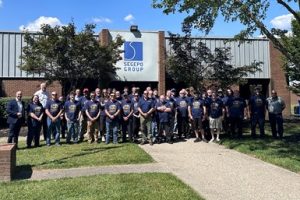
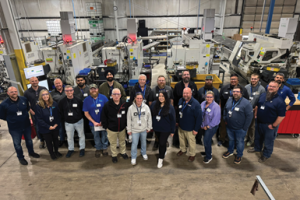
One of Precision Machined Products Association’s (PMPA) founding members, SEGEPO-FSM, marked a historic milestone on September 11, 2025, celebrating 120 years at its U.S. plant in Cold Spring, Kentucky. SEGEPO-FSM is a leader in custom screw-machined and precision-turned parts, produced on multispindle automatic machines and CNC turning lathes. It specializes in the manufacturing of threaded metal inserts, compression limiters, fluid-control and pressure-regulation components, specialty fittings, custom fasteners and other tight-tolerance parts designed for high-performance applications. Its expertise supports a wide range of industries, including automotive, appliance, heavy truck, electronics and fluid-control systems. With a commitment to attention to detail, the company emphasizes rigorous quality systems, precision manufacturing and responsiveness to customer requirements. 

The event brought together employees, partners, community leaders and international colleagues to honor more than a century of craftsmanship, innovation and global collaboration. The program highlighted SEGEPO-FSM’s unique role through Fischer Special Manufacturing Co. as one of the founding members of the PMPA. On behalf of PMPA, I was honored to attend and express our gratitude for its vision and leadership in helping establish an association that continues to champion workforce development, manufacturing excellence and the spirit of collaboration.

On behalf of SEGEPO Group and SEGEPO-FSM, leadership extended heartfelt thanks to all teams, employees and distinguished guests whose presence made the celebration truly memorable. As stated by Aurelien Petit, SEGEPO-FSM’s director of sales and marketing: “This milestone is not only a tribute to the legacy we have built in the region and across the nation but also a recognition of the people whose dedication, trust and partnership have made our journey possible.” 

Beyond reflecting on its legacy, SEGEPO-FSM emphasized its ongoing investment in advanced technology, sustainability practices and training initiatives that will ensure its relevance for decades to come. The company reaffirmed its commitment to carrying forward the values and spirit that have defined its operations for over a century.

The anniversary was not just about machines but also about people — the skilled craftspeople, engineers, leaders and partners who together made 120 years of success possible. When the employees paraded from the shop in their 120th anniversary T-shirts, the pride on their faces was obvious. Aurelien noted, “Together, you have all contributed to 120 years of excellence, and we look forward to building the future with you.”

On behalf of PMPA and its members, we congratulate SEGEPO-FSM on this milestone, thank the company for its enduring partnership and celebrate the contributions it continues to make in advancing precision machining in Kentucky, across the nation and around the globe.



Author

Carli Kistler-Miller, MBA has over 25 years of experience with operations, event/meeting planning, marketing, writing and communications.
Email: cmiller@pmpa.org — Website: pmpa.org.


ICYMI- In Case You Missed It

by Joe Jackson

Director of Communications & Events, PMPA

Published October 1, 2025

Download Magazine Article


New Members

  • Chicago Extruded Metals
  • Sharp Turn Products
  • Reacton Fire Americas
  • Alloy Precision Technologies
  • CLC Engineering
  • CDM Machine
  • ThermOmegaTech


Past Events

  • PMPA Northern Ohio Chapter:
    Cleveland Whiskey Distillery Tour


  • Connecticut/Eastern New England Chapter Golf Outing


Upcoming Events

  • October 9-12 – Annual Meeting 2025 | San Antonio, TX
  • PMPA Educational Foundation Golf Outing | San Antonio, TX


Speaking Of Precision Podcasts

  • Talking Business Part 7 with John Detterbeck
  • Understanding Type I and Type II Errors in Precision Machining
  • Annual Meeting 2025 Primer
  • 3D Printing Technology for the Shop


Committees

The PMPA Management Update Committee met in Charlotte, NC at the OMNI Charlotte, creating a content rich conference program with topics like leadership, human resources, and A.I. in manufacturing. As always, this conference will be packed with industry insights, expert networking, and sessions on cutting-edge trends. More information on the PMPA Management Update Conference will be available later this year.


ListServe Communities Topics

Have a specific question or challenge? PMPA’s ListServes — Technical, Quality, HR, IT, and Corporate — let you tap into the right community of peers who’ve been there, solved that! Here are the top five conversations in the Listserve Community last month:

  • Technical: Parts Washers
    Tight tolerance spur gear. Request for recommendations creating gear feature without a hobbling attachment. Received five responses from members with suggestions.


  • Technical : Swiss Parts
    Deburring ideas — Member had an aluminum part with multiple features that needed deburred. Received 17 responses from members with suggestions.


  • Technical: Steel grade FK8
    Recommendations for Vision Inspections Systems. Received 12 responses from members with suggestions.


  • Quality: Setting up new computers
    Material Declaration — Discussion on templates for various communications with customers on regulatory requirements like PFAS, Prop 65 , REACH RoHS, TSCA, and others. Received five responses from members with suggestions.


Interested in Membership?
Email Harry Centa at hcenta@pmpa.org


Author

Joe Jackson

Director of Communications & Events, PMPA

Email: jjackson@pmpa.org — Website: pmpa.org.
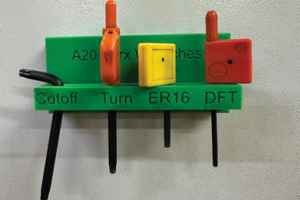
PMPA Craftsman Cribsheet #144: FDM Printing for the Shop

Published October 1, 2025

By David Wynn, Director of Technical Services & Industry Affairs

Download/View Cribsheet

Fused deposition modeling (FDM) is typically a spool of plastic fed through a nozzle depositing one layer at a time. FDM is a great method for making larger prints. It also has the capability to make hollow or honeycomb-formed interiors. Printing hollow can reduce weight without compromising strength. Hollow prints can also reduce the amount of material used on large prints. Final print tolerances of around ±0.015-0.030 inch are typical.


Author

David Wynn

David Wynn, MBA, is the PMPA Director of Technical Services & Industry Affairs with over 20 years of experience in the areas of manufacturing, quality, ownership, IT and economics. Email: dwynn@pmpa.org — Website: pmpa.org.
The Gen Z Effect: Transforming Manufacturing Towards the Future

Discover how Gen Z is reshaping the manufacturing workforce with their values of flexibility, sustainability, technological advancement and inclusivity. 

by Emily Riley

Executive Director, PMPA

Published October 1, 2025

Download Magazine Article


According to the U.S. Bureau of Labor Statistics, by the end of 2025, the U.S. workforce is projected to consist of approximately 170 million employees. The World Economic Forum reports Gen Z (currently 13 to 28 years old) will make up over 25% of this workforce, marking a significant demographic shift. Currently, about 35% of workers are Millennials (currently 29-44 years old), followed by 31% who are Gen X (currently 45-60 years old). Baby Boomers (currently 61-79 years old) comprise roughly 15%, but their participation is declining as many continue to retire, with the Silent Generation nearly fully retired. While Millennials and Gen X still form substantial portions of the workforce, the rapid entry of Gen Z is reshaping the labor landscape.

Gen Z
Generation Z, born from 1997 to 2012, is characterized by their digital nativity, social consciousness and desire for purpose-driven careers. Understanding their expectations is crucial for precision machining companies aiming to attract and retain this new workforce segment. Unlike older generations that often accepted rigid 9-to-5 work schedules, Gen Z values flexibility, remote work options and work-life continuity. This shift is driven by their familiarity with technology, which has normalized remote collaboration and digital communication. To meet these expectations, shops may benefit from shifting their traditional setups by offering flexible shifts, remote management tools and adaptable workspaces.

Gen Z employees also prioritize meaningful work that aligns with their values. They are highly interested in environmental sustainability, ethical labor practices and corporate social responsibility. They want their jobs to contribute positively to society and the planet. Manufacturers can address these values by emphasizing sustainable practices, reducing environmental impact and ensuring transparency in supply chains and manufacturing processes, which can make manufacturing roles more appealing.

As digital natives, Gen Z expects workplaces to be technologically advanced. They are comfortable with automation, robotics and Internet of Things (IoT) integration, which can improve efficiency and appeal to their tech-savviness. Providing ongoing training in new technologies and fostering innovation can help create stimulating work environments aligned with their preferences. Furthermore, Gen Z values continuous learning and career development. They seek workplaces that promote skill-building, upskilling and clear pathways for advancement. Shops may use this as an opportunity to foster loyalty and motivation through training programs, mentorship and opportunities to develop technical skills. PMPA members can take advantage of pmpa.org’s Knowledge Centers, National Technical Conference and Management Update to provide employees with resources, education and networking opportunities. 

Finally, diversity and inclusivity are fundamental for Gen Z. They prefer workplaces that embrace diversity, promote equality and are free from discrimination. Creating policies that celebrate diversity and foster a welcoming environment is essential for attracting this generation.

As the workforce shifts toward a majority of Gen Z employees, manufacturing shops can meet their expectations by offering flexibility, emphasizing sustainability, integrating cutting-edge technology, supporting continuous development and fostering inclusive environments. Aligning workplace practices with these values will help attract and retain today’s incoming worker ensuring a manufacturing shop stays resilient and innovative in the industry.


Author

Emily Riley, MAT, MBA has over 20 years of experience in supply chain management, R&D leadership, operation, innovation and product development and education.
Email: eriley@pmpa.org — Website: pmpa.org.

Errors of Commission vs Omission

Errors will inevitably occur, but understanding what the error is helps us get at the root of the problem.

by David Wynn

Director of Technical Services & Industry Affairs, PMPA

Published October 1, 2025

Download Magazine Article


Last month, we looked at Type I and Type II errors in the precision machining industry. This month, we will dive into errors of commission versus omission. Understanding types of errors allows us to better understand the causes of them on our quest to eliminate all errors.

  • Error of Commission. A mistake that consists of doing something wrong, such as including a wrong amount, or including an amount in the wrong place, according to the Cambridge Dictionary.
  • Error of Omission. A mistake that consists of not doing something you should have done, or not including something such as an amount or fact that should be included, according to the Cambridge Dictionary.

Simply put, an error of commission is the act of committing an error and error of omission results because no action was taken. Breaking this down further, both errors can be applied in a matrix of accidental and intentional. We never want to intentionally make errors, but we are humans.

Error of Commission
A team member starts to setup a job and grabs the wrong material. The material for the job is 1018 steel and the material the team member is utilizing is 12L14 steel. The incorrect material was stored in the wrong place. 
The process involves significant subsequent cold work. After the parts have been machined, it is impossible to distinguish between 1018 and 12L14 without chemical and mechanical property testing. Using the wrong material was an error of commission. It was an unintentional error with significant impacts on downstream processes. 

Consider a similar situation where a difficult job is made from pre-hardened 4140 with tight surface finish requirements and close-tolerance dimensions. The print explicitly states “must be machined from pre-hardened material.” The team member is unable to achieve conforming parts, decides to order 4140 annealed then harden after machining. Parts failed in final products because process was not followed and parts did not achieve the desired level of toughness. This intentional error of commission has broken the trust between supplier and customer and could lead to legal action. 

Error of Omission
A team member adjusts an offset on for a turning tool that turns multiple features to adjust the first feature of the turn.The machine continues in production later to find that other turned features are now out of spec. In this scenario, you can see both types of errors were committed. The adjustment of the machine was an error of commission because it created non-conforming parts because of the action of the team member. The error of omission was the inaction of not checking the other features this tool created. In this situation, the root error was failing to adequately check all the features the tool cut. That omission created downstream waste. This error was also unintentional. 

A more inconvenient situation would be that a team member has parts labeled and segregated at the machine. One pan has known conforming parts. The other pan has a questionable dimension. The pans are marked clearly. 

At shift change, a team member combines the pans and fails to identify that it may contain non-conforming material. This intentional omission is an error that could cause major consequences for the customer if missed in final inspection. 

Any intentional error is bad practice. We never want to make errors on purpose but, as humans, too often we have become accustomed to intentional errors of omission as practice. What they do not know will not hurt them. If we do not put up a billboard no one will ever know. Intentional errors of omission often result from unintentional errors of commission. Our customer relationships are based on effective communication. As industry leading shops we build trust through open communication. Trust is the foundation for long-term customer relationships. 

In precision machining, we are striving for perfection. We want perfect parts, shipped on time, with all stated and implied requirements fulfilled. Errors will inevitably occur, but understanding what the error is will help us get at the root of the problem to create preventative measures and stop errors before they happen. We never want to intentionally make errors. That is not good for our customers or those around us. It creates a culture of acceptance of error. Our culture should revolve around stopping errors before they happen, moving to our goal of zero errors. It is an unobtainable vision, but striving for that perfection eliminates the need for intentional errors of omission. With zero errors, there is nothing to omit. 


Author

David Wynn is the PMPA Director of Technical Services & Industry Affairs with over 20 years of experience in the areas of manufacturing, quality, ownership, IT and economics. Email David


ICYMI- In Case You Missed It

by Joe Jackson

Director of Communications & Events, PMPA

Published September 01, 2025

Download Magazine Article


New Members

  • Tower Metalworking Fluids
  • Machining Technologies Inc.
  • Winema
  • P4Swiss/Lindel
  • Re:Build Manufacturing
  • Rempco


Recent Events

  • PMPA Illinois Chapter Social: Rockin’ in the Park in Rosemont


  • How U.S. Tariffs and Trade Policy Impact Canadian Manufacturers Webinar


Upcoming Events

  • September 9 – Southeast Michigan Chapter Golf Outing | South Lyon, MI
  • September 9 – Wisconsin Chapter Golf Outing | Wales, WI
  • September 16-17 – Mastery Tour #2 | Charlotte, NC
  • September 24 – Illinois Chapter Golf Outing | Mt. Prospect, IL
  • September 25 – Canada Chapter Golf Outing: Threadrolling with CJWinter | Toronto, Canada


Podcasts

  • Talking Business Part 6 with John Detterbeck
  • CMMC with Corp. Infotech
  • Techniques to Help Beat the Heat
  • PMPA Educational Foundation: Progress, Programs, and Possibilities


Fisher Phillips Legal Portal

PMPA members now have exclusive, convenient access to the Fisher Phillips Legal Portal – a comprehensive online resource for employment law updates, expert guidance, and policy information tailored to manufacturers. 
https://www.pmpa.maxx.matrixdev.net/fisher-phillips-legal-portal/


ListServe Communities Topics

Have a specific question or challenge? PMPA’s ListServes – Technical Quality, HR, IT, and Corporate – let you tap into the right community of peers who’ve been there, solved that! Here are the top five conversations in the Listserve Community last month:

  • Technical: Parts Washers
    Request for recommendations on parts
    cleaning systems. Received 8 responses
    from members with suggestions.
  • Technical : Swiss Parts
    Member sent in specifications and
    wanted to know how others would run
    the specific part in a Swiss machine.
    Received 15 responses with suggestions.
  • Technical: Steel grade FK8
    Wood Screw Threads, 416SS from India,
    Looking for a source for 1045 Pre-HT,
    MIL-STD-171 hard chrome plating
    vendor needed
  • HR : Shop Towels & Floor Mats
    Discussion on towel services and their
    various products used in shops. Do mats
    slip when saturated with coolant? Has
    anyone been forced to sign a five year
    contract?
  • IT : Setting up new computers
    Discussion on provisioning new
    computers with database client, OBDC,
    install customer software, and have the
    computer ready to go with an automated
    process.


Interested in Membership?
Email Harry Centa at hcenta@pmpa.org


Author

Joe Jackson

Director of Communications & Events, PMPA

Email: jjackson@pmpa.org — Website: pmpa.org.

PMPA Craftsman Cribsheet #143: 3D Printing Technology for the Shop

Published September 1, 2025

By David Wynn, Director of Technical Services & Industry Affairs

Download/View Cribsheet

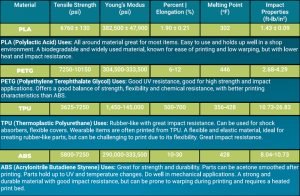
Below is a basic breakdown of various 3D printing technologies and how they relate to work in our shops. The breakdowns are to represent a broad category of methods at a high level. A more granular analysis would illustrate each category that can vary greatly in applicability and method. There are various new technologies that may differ from these descriptions and in some cases combine multiple methods mentioned below.   

FDM — Fused Deposition Modeling
When most people think of 3D printing, they think of fueled deposition modeling (FDM). Typically, a spool of plastic is fed through a nozzle depositing one layer at a time. FDM is a great method for making larger prints. It also has the capability to make hollow or honeycomb-formed interiors. Printing hollow can reduce weight without compromising strength. Hollow prints can also reduce the amount of material used on large prints. Final print tolerances of around ±0.015-0.030″ are typical. PLA (polylactic acid) has good chemical resistance and can hold up well in the shop. I have used PLA for fixtures, gage holders, collet holders and other items that have encountered solvents, coolants and oils with no part deformation.  

  • Uses. Fixtures (low tolerance), gage holders, collet racks, general purpose replacement for plastic containers.
  • Common materials. PLA, TPU (thermoplastic polyurethane) and ABS (acrylonitrile butadiene styrene).

Resin Printing
Printing is performed by dipping a plate into resin and which is hardened using UV light. Resin printing works best when printing highly detailed tight tolerances prints. Even with cheap resin printers (<$500) I have achieved tolerances of ±0.005″ on prints.  I have even held ±0.002″ on some critical dimensions when proper care is taken. Because of the accuracy of resin, it can be used to make lower tolerance test parts. 

  • Uses. Test part prints, jigs, fixtures, customer ejectors, robot grippers, vice jaws and more. Resins are mostly proprietary to manufacturers.  They are typically defined by final properties.
  • Common materials. Detail resin, flexible resin, heat resistant resin, tough resin and imitation ABS.

Powder Bed Printing
Powder printing has been around for a while but has typically been only available for high-end printers.  There are several hobby/prosumer printers available for under $4,000. The raw material is a powder which is fused together with heat or a chemical binder. In general, parts must be post processed to complete the part. Typically, loosely bound material (green part) will be heat treated and washed to reach the finished part. Metal can be printed using this method. Prints can also be hollow like FDM. Tolerances ±0.015″ can be achieved but dimensional change during heat treatment can make tight tolerances challenging. 

  • Uses. Same as the other methods but with added materials including metals.
  • Common Materials. Plastics, metals, polymers and ceramics.


Author

David Wynn

David Wynn, MBA, is the PMPA Director of Technical Services & Industry Affairs with over 20 years of experience in the areas of manufacturing, quality, ownership, IT and economics. Email: dwynn@pmpa.org — Website: pmpa.org.

My First Impressions of PMPA

PMPA is a trade association fueled by passion.

by Emily Riley

Executive Director, PMPA

Published September 1, 2025

Download Magazine Article


As of this writing, it’s been one month since I began serving PMPA and our members as the executive director, and I’ve already felt a driving force of passion in PMPA. Whether it’s delivering mission-critical components that simply cannot fail and sharing this expertise with other member companies across PMPA, or our staff dedicated to delivering superior benefit that advances member companies in the industry, passion is at the heart of it all. 

PMPA is a Powerhouse in the World of Precision Machining 
Passion is not only enthusiasm; it’s a verb. On my very first shop floor visit, I saw passion in action and understood why PMPA is such a powerhouse in the world of precision machining as a trade association. 

PMPA is made up of member companies who are committed to the superior efficacy of aerospace, automotive, medical, electronics, defense or other demanding no-fail industries by delivering astonishing levels of precision within tolerances as tight as one-thousandth of an inch or less in parts. This deep sense of passion fuels member companies’ responsibility, and members share this passion along with their expertise, knowledge and insights with each other. While at the core of staff there is a devotion to tailored, anticipatory approaches that go above and beyond which is not only accurate but also timely and actionable. It is the driving force behind the creation of reliable information, relevant resources, strong advocacy and meaningful networking opportunities that deliver member value. Our team strives to provide customized, user-friendly tools built to solve real-world problems. 

PMPA is a Trusted Partner through ‘Better Together’
I’ve also observed that the PMPA slogan “Better Together” is teamwork amplified. Teamwork in Better Together is not just a slogan of the association but also an exceptional way PMPA operates. Leading with Better Together has transformed PMPA from a service provider into a trusted partner that sees, supports and inspires members. 

As a trusted partner, for example, PMPA offers designed execution of networking opportunities with events as experiences where each event is a gathering and is thoughtfully planned to connect members in meaningful ways. One of PMPA’s goals is to provide opportunities for relationships to ignite at these events which can then lead to collaboration, mentorship and lasting partnerships. 

A Shared Purpose in Excellence
This passion in action across PMPA has a sense of purpose in achieving nothing short of excellence. With passion, Better Together teamwork, and a shared purpose, PMPA drives trust and continuous growth across the precision machining industry. 

My early experiences have left no doubt: PMPA is a force in the manufacturing world. It is powered by passionate, high-performing leaders who are committed to making a difference. Better Together. 


Author

Emily Riley, MAT, MBA has over 20 years of experience in supply chain management, R&D leadership, operation, innovation and product development and education.
Email: eriley@pmpa.org — Website: pmpa.org.

Understanding Type I and Type II Errors in Precision Machining

The impact of statistical decisions on quality.

by David Wynn

Director of Technical Services & Industry Affairs, PMPA

Published September 1, 2025

Download Magazine Article


In the realm of statistics and quality control, the concepts of Type I and Type II errors are key to understanding how decisions are made and the potential consequences of those decisions. While these terms are often discussed in the context of hypothesis testing, their significance extends far beyond theoretical statistics. Understanding the practical implications in precision machining is important when mistakes are not acceptable in the no-fail industries we serve. 

Defining Type I and Type II Errors
A Type I error, also known as a “false positive,” occurs when a test incorrectly rejects a true null hypothesis. In simpler terms, it means detecting a problem or defect when none exists.

A Type II error, or “false negative,” happens when a test fails to reject a false null hypothesis, or when a test fails to identify a real problem or defect.
In manufacturing and particularly in the precision machining industry — where accuracy and tight tolerances are critical, the distinction between these two types of errors can mean the difference between success and failure.

Type I Errors in Precision Machining
Imagine a quality control inspection where every part is measured to ensure it meets strict specifications. If the inspection system commits a Type I error, a part that meets all requirements is incorrectly deemed defective and rejected. While no faulty part reaches the customer, it also means waste. In our shops we strive to eliminate waste — wasted material, wasted operator time, wasted machine time — which all increase production costs. Reducing the number of Type I errors in our shops helps us preserve the value that our performers create.  

Type II Errors in Precision Machining
A Type II error, on the other hand, occurs when a defective part passes inspection.  This is the worst possible scenario in our shops. Parts that have been 100% inspected but defective parts still make it to the customer. In no-fail industries, this can be especially dangerous. A defect might lead to mechanical failure, safety hazards or even death.

Consider a scenario where a faulty gage allows undersized parts to make it to a medical device manufacturer making heart valves. The repercussions could be disastrous. If a Type II error occurs when the valve is tested at the customer, it could lead to it being installed in a patient. 

One answer to this problem is tightening our acceptance criteria; however, this would increase Type I errors and result in more parts that meet customer specifications being rejected. Although I would much rather have parts that meet spec be rejected than the non-conforming parts making it to the customer, there must be balance. The goal is zero percent Type II errors and as few as possible Type I errors.  In practice, achieving the goal of zero Type II errors means that we can never achieve zero Type I errors. The challenge is to create systems that reduce variation. Statistical process control is the best solution in our toolbox to provide scientific actionable data to reduce variation.

Type I and Type II errors are not just abstract statistical terms. They are concrete realities that affect operational efficiency, product quality and profitability. Understanding and managing these errors is essential for our shops to work to eliminate mistakes. Continuous improvement involves educating ourselves on the potential for problems and eliminating them before they happen. When we understand how we can fail, poka-yokes (mistake-proofing) can be added to the process reducing our potential for failure. 


Author

David Wynn is the PMPA Director of Technical Services & Industry Affairs with over 20 years of experience in the areas of manufacturing, quality, ownership, IT and economics. Email David