PMPA Northern Ohio Chapter Supplier Night 2026 Exhibitor Registration
Wednesday, December 2, 2026
3:00pm – 8:30pm
Holiday Inn
6001 Rockside Road
Independence, Ohio 44131
Author: ddavis

Holiday Inn
6001 Rockside Road
Independence, Ohio 44131

The February 2026 ITR Economics report has been released. The ITR Economics quarterly forecast report gives us insight into eight industries that are the primary drivers of our shops’ success. The ability to consistently look into the future with actionable data gives us a competitive edge. The reason that PMPA members closely follow the ITR Quarterly forecast report is that the ITR process of analysis clarifies and makes patterns clear that the news cycle seems to miss. The February report we see growth likely to accelerate some this year. “Some markets that were hit harder in 2025 will see larger growth rates in 2026, in part due to a weak point of comparison, but they will likely remain below record highs due to sticky interest rates.” Check out in this month’s PMPA May 2025 Economic Report from ITR Economics.
The Institute for Trend Research (ITR) quarterly reports focus on major areas of economic growth and decline in key market segments for the Precision Machined Products Industry. They are provided to PMPA members as part of the association’s overall business intelligence program and are used as a management tool to help PMPA members plan for what lies ahead and which markets they should focus on in a complex manufacturing environment.

Thursday, April 16, 2026 (11am – 2pm US/Eastern)
Merrifield Machinery Solutions
5430 Gatewood Drive
Sterling Heights, MI 48310
Join PMPA’s Southeast Michigan Chapter for a Lunch & Learn on modern manufacturing.
Enjoy an exclusive facility tour featuring cutting-edge CNC technology, followed by insights from industry expert Marks Stymiest of Nelson Steel & Wire L.P.
on steel production, material differences, and today’s market trends.
Published January 1, 2026

A new year is upon us. It is the time for leaders to cast a vision for our organizations in this new year. We build goals around that vision to make it a reality. It is important to set goals. Goals are the cornerstone of high-achieving shops. However, before we can set goals for our shop performers, it is critical that we, as leaders, have our own goals in order. When goals are used properly, they have an almost magic power to drive the leader’s vision. For our goals to be effective we must be sure they reflect that vision. When goals are used properly, they guide all actions in a shop. Have we set and are we following goals for ourselves?
As leaders we are the example for goal setting. We want our performers to be setting and achieving goals. It is important for us as leaders to set goals for ourselves and let the team know about it. We must show our own commitment to the cause. By demonstrating success at using goals, our model can both teach and inspire our performers. What is a good goal? How do we set and accomplish relevant goals? Let’s take a look.
What is being accomplished?
This is the beginning of the goal. List out what is going to be done. Make it specific. Ensure that it is measurable. Make sure it is a bit of a stretch. It is amazing how far a leader can go when the leader starts working systematically toward a goal, so do not be afraid to push.
What is the due date?
Setting a due date. This step is critical. If the leader does not have a set time to get it done, then it is not a goal, it is a dream. The leader needs a date to have it achieved by and set target check-ins, so the goal does not get behind. Due dates make the organization accountable to its vision.
How is the goal going to be measured?
It must be measurable. Is the organization going to increase efficiencies by 10%? Are we accomplishing 5S in a department? Remember Boolean (true/false) goals are still a measure. Either it is achieved or not.
Who is responsible for achieving the goal?
Who is the person that will be held accountable for the goal completion. If it is a personal goal, then you should be looking in the mirror. For company goals, the leader must build a team around them to help hold the leader accountable. The leader’s job is to ensure the team has both responsibility and authority to accomplish their own goals. The leader cannot hold the team accountable for achieving goals for which they do not have the power to allocate resources.
It is important for the leader to communicate goals, even personal goals, with the team. As leaders we are the drivers of culture in our shops. If we want a culture of goal setting, we must set the example. Leaders should show how their own success is built on goals. Leaders then can elevate their team by showing them how the team can grow with goals. This is how leaders can build high-achieving teams in their shops.
Once the leader has established an example of successful goal setting, the organization will embrace the culture of setting goals. It becomes self-perpetuating. The leader, by example, has established a culture where performers are empowered to create goals. Performance and job satisfaction will increase. Now the leader can create and share the vision and allow the performers to set goals to achieve that vision. Leaders communicate the process of setting goals and the achievement of those goals with team. Giving the team ownership in the goals allows the leader to cascade the feeling of accomplishment to all members. Each department can create a vision based on the company vision. Now the performers in each of those departments can set their goals to align with the departmental vision which is aligned to the company vision. We now have complete and total alignment from top to bottom. The leader has now created a culture of goal setting.
Take time to cast the vision and build goals around the vision. Clearly communicating the path for achieving that vision. It is a new year. With it comes new beginnings and a chance to use the calendar as the reset button to refocus our efforts for our organizations. Go and create a culture of
goal setting.
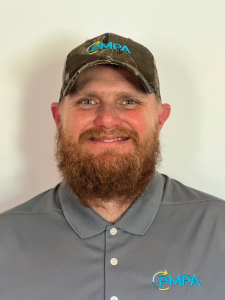
David Wynn is the PMPA Director of Technical Services & Industry Affairs with over 20 years of experience in the areas of manufacturing, quality, ownership, IT and economics. Email David
Published January 1, 2026
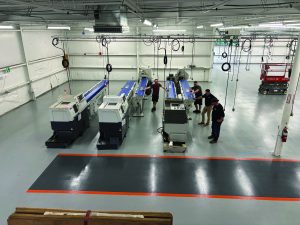
In part one of W.H. Bagshaw’s moving story, Vice President Adria Bagshaw shared the financial and logistical insights behind moving after 75 years in the same facility. But beyond spreadsheets and mortgages, the heart of the transition lay in people, planning and purpose.
Hire for Expertise, Not Just Execution
To guide the complex move, W.H. Bagshaw brought in a project planner who had spent decades in manufacturing and now specialized in helping companies relocate. “He’s seen everything that can go wrong,” Adria says. “He’s helped us sequence every step so we knew exactly who’s doing what.”
That clarity was crucial. The move was set for late May 2025, with a goal of having machines running by June 2, 2025. Adria credited their consultant’s experience with keeping the process smooth and stress manageable. “He’s not just a planner,” she says, “he’s a translator between chaos and order.”
Build Engagement Through Ownership
Instead of outsourcing every task, W.H. Bagshaw leaned on its own people. Employees volunteered weekends to clean and paint, and interns were hired to help with IT, wiring and smaller projects. “They’ve put their heart and soul into this building,” Adria says.
That sense of ownership is part of the company’s culture. “We’re a family business in every sense,” she says. “Using our own team wasn’t just cost-effective, it was meaningful.”
Recognize the Builders
When one machinist with architectural training took on the layout design, W.H. Bagshaw rewarded him. “He was so proud,” she says. “We plan to make a plaque with everyone’s names — like architects on a building. It’s their legacy.”
Keep Communication Visual and Open
Transparency was the key throughout the move. “Every time we updated the layout, we printed it large and posted it with sticky notes for comments,” Adria explains. “It kept people engaged and they caught the little things — like storage space and a hand washing station — that are easy to miss.”
W.H. Bagshaw opened its new doors on schedule. Adria reflects on the journey with gratitude. “We’ve been guided by experience, collaboration and a whole lot of teamwork,” she says. “After 75 years, this move isn’t just about a new address — it’s about building the next generation of who we are.”

Carli Kistler-Miller, MBA has over 25 years of experience with operations, event/meeting planning, marketing, writing and communications.
Email: cmiller@pmpa.org — Website: pmpa.org.
Published January 1, 2026

PMPA’s IT Committee met at INDEX Corporation in Noblesville, IN to start planning
their sessions for Management Update Conference 2026 (March 5-7 in Charlotte, NC)
and for the National Technical Conference 2026 (May 3-5 in Toledo, OH.)

Have a specific question or challenge? PMPA’s ListServes — Technical, Quality, HR, IT, and Corporate — let you tap into
the right community of peers who’ve been there, solved that! Here are the top conversations in the Listserve Community
last month:
Interested in Membership?
Email Harry Centa at hcenta@pmpa.org
Joe Jackson
Director of Communications & Events, PMPA
Email: jjackson@pmpa.org — Website: pmpa.org.