Have You Checked Your Quote Book Recently?

Check your quote book to get a glimpse of where your business is positioned.

by David Wynn

Director of Technical Services & Industry Affairs, PMPA

Published July 1, 2025

Download Magazine Article


When looking at business conditions, we must self-normalize data. Business is an easy target for noise. Everyone around us — the news media, social media, industry media and colleagues — all have their shiny objects they follow. The trick is to find data that tells us where the trend is going, not our current state. Knowing the direction and slope of a trend in business provides clarity for making decisions. Clarity in decisions provides the path to victory.

Not all metrics work in every business cycle. Remember the warning label on every prospectus: “Past performance does not guarantee future results.” The metrics that have long tracked records of providing forward-looking analysis help predict trends. I use the term “metrics” plural because several indicators pointing in a direction will have a better chance of predicting the future.  Leading indicators provide a snapshot of the future and state of the business cycle. 

It is important to find multiple indicators in our business to shield our decisions from the business cycles where one indicator screams fire while the rest do not. One of the best indicators in sales is your pipeline or funnel. 

There are several ways to look at a sales funnel. In our business of machining, we often start at the proposal stage, skipping prospecting and qualification. At the proposal stage there are hard facts which provide data for making future state predictions. Prospecting and qualification are valuable parts of the process but have limited data for  making predictions. Tracking the total of outstanding  proposals provides a number. Knowing the win-rate predictions can be made on the future state of business.  

When talking about total proposals — what I call the “quote book” — there are four data points to track:  

  • Total Won. Quotes won and a part order (PO) is received.
  • Total Awarded. This is typically contingent contracts. A customer has awarded you the business contingent on their customer ordering the widget.
  • Total Lost. Quotes that were lost due to cost, delivery, quality requirements and so on.
  • Total Open Quote Book =  Total Quote Book – Total Lost – Total Won.

I leave in total awarded even though they are technically a winning quote because no PO means they don’t generate dollars for the business. Total awarded is like potential energy. It has the potential to generate cash but without a PO, it is still in our “quote book”. This can get more complicated to give granular detail. Tracking average days outstanding to each metric and the percentage of each of the data points can provide a time-based weighted average predictive analysis of the quote book.  

So … have you checked your quote book recently? I know shops that are running 200-300% above normal open quote book. 

One shop is currently at 500% above normal. Some of this is tariff window shopping. Larger primes are gathering data on what it will cost to produce in the United States. I don’t believe all of this is exploratory. Gross private investment increased by 21.9% in the first quarter GDP. Companies are building new manufacturing facilities in the U.S. Check your quote book to get a glimpse of where your future is positioned. 

 

Author

David Wynn is the PMPA Director of Technical Services & Industry Affairs with over 20 years of experience in the areas of manufacturing, quality, ownership, IT and economics. Email David


 

Generating Value — Generational Values

Accounting accounts for costs. How does a successful multigenerational business account for value(s)?

by Miles Free III

Director Emeritus, PMPA

Published July 1, 2025

Download Magazine Article


I have attended every Horn Technology Days program since 2011. Regardless of economic or geopolitical news, every two years Horn has had new technology on display, a new cohort of apprentices and new investments and capabilities in their means of production. I asked CEO Markus Horn and Press Officer Christian Thiele if we could explore the thinking that makes this so.

Miles Free (MF): Horn continues to invest in your technology and people. I would argue that you also invest in your customers. How does this make Horn the employer of choice and enable you to attract the talent that you require?

Markus Horn (MH): Technology equals growth. We continue to invest so that we can stay aligned to our vision of the future. During the Great Recession (2009/2010) we placed on order 80 machines. Crisis provides a very good opportunity to succeed in paths  where you can grow and have the flexibility to help the customer, while others are playing it safe and do not invest.

MF: This courage to invest helps you to hire talent?

MH: The question about hiring is often seen as one of quantity. How many? It is not. It is, to our way of thinking, about how many are recommended to find their success here in our manufacturing. To be a preferred employer.

MF: You are third generation of your family in the family business, I am third generation of my family in manufacturing, how many people employed at Horn do you think are similarly multigenerational, supporting your “recommended to work here” thesis?

MH: We asked our apprentices how they learned of our company — online, websites and so on. We were surprised to find none of them came from our social media. All came because someone that they knew personally shared our company. Our first principle is that all employees must be satisfied here. They are not a number. The fact that we have so many recommendations is our indicator — showing all of our employees share our commitment and values.

MF: What do you think the number of multigenerational employees is here in Tubingen? 

Christian Thiele (CT): I was prepared for this question — of our 900 employees, over 200 are multigenerational in some way. When we say that Horn is a family company, we can see that over one fifth of our employees are indeed kin as well. So, they have family bonds and shared values that align with our company  goals and values.

MF: I have always believed that having work that matters — purpose, if you will — is critical in keeping performers satisfied.

CT: Purpose does matter, and as an employee, if they are responsible for their purpose and they have the package and what they need to perform, they can have confidence in the company and their colleagues, and so produce tools that lead the way.

MH: If it is something no one else has done before, if we are first, we can only win. This gives us the courage to invest. This is our purpose to use the latest science to create our own future. It gives us time to develop what is now the newest. We have a single vision over time. Many companies that are focused on price are focused on cost. We believe that if shops want to win, they actually need to focus on value. My father and grandfather would say, “I don’t have enough money to buy something cheap.” If you want to win, you need to have the best tools, the latest capabilities. That is the true differentiator. It is about value, not cost. Values that people can align with.

MF: It seems to me that one of the values at Horn that is shared through the generations is the focus on the future. From the outside, it looks like pragmatic optimism. But that really understates what is going on.

MH: Technology brings us forward. That is why we call this Technology Days. It is about revealing to our customers the latest technology. Humans naturally fear not knowing the future. At Technology Days, we bring our customers to the future that we have intentionally created, the success that we want for them and ourselves. The economic cycles, the news, these come and go, but we are not necessarily a part of it. As a company, as a family, we all need to be prepared to get through these. Our preferred way to prepare is to use the latest technology.

CT: If employees have a purpose — meaningful work — they will stay aligned with this goal. 

MH: Clear transparent communications — open discussion of facts — leads to confidence and honesty. With such a culture, why would one leave? Despite uncertainty, technology is the driver of sustainable growth in the future. Why should we not invest? Why should we not continue to hire, to train? As Swabians, we are never satisfied. So, everything that we do is to make the future better.


Author

Miles Free III is the PMPA Director Emeritus with over 50 years of experience in the areas of manufacturing, quality and steelmaking. Miles’ podcast is at pmpa.org/podcast. Email Miles


The ITR Economics quarterly forecast report gives us insight into eight industries that are the primary drivers of our shops’ success. The ability to consistently look into the future with actionable data gives us a competitive edge.  The reason that PMPA members closely follow the ITR Quarterly forecast report is that the ITR process of analysis clarifies and makes patterns clear that the news cycle seems to miss.  Cut through what the financial media is telling you about the economy and use the ITR report to get at the heart of what affects your shop.  The May report still shows moderate growth for this year and industrial production moving into an accelerating growth phase. Check out in this month’s PMPA May 2025 Economic Report from ITR Economics.

View/Download


The Institute for Trend Research (ITR) quarterly reports focus on major areas of economic growth and decline in key market segments for the Precision Machined Products Industry. They are provided to PMPA members as part of the association’s overall business intelligence program and are used as a management tool to help PMPA members plan for what lies ahead and which markets they should focus on in a complex manufacturing environment. 

PMPA Craftsman Cribsheet #140: How To Read an HTS Code

Published June 1, 2025

By David Wynn, Technical Services Manager, PMPA

Download/View Cribsheet

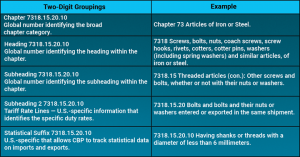
With tariffs at the forefront of everyone’s mind, it is important to understand how Harmonized Tariff Schedule (HTS) codes work. Careful consideration is required because a simple digit error can be the difference in paying a 170%+ tariff or no tariff. The first six digits are the Harmonized System (HS), the internationally recognized system for identifying products for trade. In the U.S., the addition of four digits is used for tariff classification and statistical data collection. An entire code is broken up in two-digit segments. The chart below explains an example 10-digit HTS code giving the details of each two-digit section.


Author

David Wynn

David Wynn, MBA, is the PMPA Technical Services Manager with over 20 years of experience in the areas of manufacturing, quality, ownership, IT and economics. Email: dwynn@pmpa.org — Website: pmpa.org.

STATE OF MANUFACTURING – Washington Manufacturing

by Joe Jackson

Director of Communications & Events, PMPA

Published June 01, 2025

Download Magazine Article

Fabricated Metal Products Manufacturing is a subsector of manufacturing that makes critical goods from metal components.

Precision Turned Products Manufacturing is a subsector of fabricated metal product manufacturing that makes the components that MAKE IT WORK!


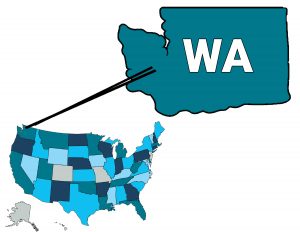
WASHINGTON ECONOMIC OUTPUT

Washington Manufacturing
NAICS 31-33
$62,800,000,000

Fabricated Metal Product Manufacturing
NAICS 332
$5,107,475,000

Precision Turned Product Manufacturing
NAICS 332721
$588,802,000

WASHINGTON MANUFACTURING ACCOUNTS FOR

Manufacturing Is Productivity –8.6% of Washington’ total output. (GDP)

Manufacturing Builds Businesses –7,938 manufacturing establishments in the state of Washington.

Manufacturing Creates Jobs – Jobs: 7.6% of all Washington’s employees are in the manufacturing sector.
(271,000 employees)

Manufacturing produces for Washington

  • Manufacturing is the fourth largest GDP Producer in Washington.
  • Manufacturing employment in Washington has grown 2.2% each year since 2019 surpassing the national average over 1.8% over that time period.

Washington is a great place for a career in manufacturing

  • Manufacturing jobs pay on average 18% over the average job in Washington.
  • Job sites are currently reporting over 3,000 available manufacturing job openings in Washington.


Sources: NAM.org, US Census, statista.com, IndustrySelect.com
Data selected to show relative values. May not be directly comparable due to differences in sampling, analysis, or date obtained.


Author

Joe Jackson

Director of Communications & Events, PMPA

Email: jjackson@pmpa.org — Website: pmpa.org.

Tariffs, HTS Codes and Your Company’s Scope

Scope creep has become a tsunami!

by Miles Free III

Director of Industry Affairs, PMPA

Published June 1, 2025

Download Magazine Article


Tariffs have become the number one item of concern and conversation in our manufacturing industry. Every day, every hour, it seems there is something new to learn about tariffs. And that is causing a great deal of concern and uncertainty. What do these mean for our business today, and in the immediate and longer-term future?

These concerns are magnified by the fact that “foreign trade” is not included in the scope of our quality management systems, nor has there been a need to understand the Harmonized Tariff Schedule (HTS) at the 10-digit level. Until now. Where can your shop turn to make sense of the tariff tsunami that is overwhelming all of the media and conversations between ourselves, our suppliers and our customers? May I humbly suggest effective associating through your industry trade association?

PMPA has led our shops to understand the impacts of the tariff developments since prior to their announcement. We have been working with our Washington D.C. team to prepare our members with online webinars, slide decks and review of HTS codes. We have helped our members push back on false tariff claims made by their package delivery providers who were misapplying tariffs by what seemed to be a random process. What else would explain an aluminum tariff being charged by the carrier for an international shipment of steel machine components? On the entire value of the shipment?

We have helped our members understand the taxonomy of HTS codes so they could help their customers determine the proper classification for the components that our shops supply based on the final product in which it is incorporated. This has been an essential benefit, as both our shop management and the supplier-facing procurement employees at our customers typically lack formal training in the increasingly important field of international business.

Navigating the Tsunami
What can you do to help your company navigate the tariff tsunami that has waves breaking far above all of our heads? Here are a few suggestions:

Join the trade association for your industry. At PMPA, we have an ongoing practice of advocating for our members as well as bringing them information that will help them navigate all of the legislative and administrative developments that can impact them and the markets that they serve.
Connect with your trade association’s staff and find out what resources they have available to explain these developments and ask advice on how to respond.

Attend the online and local programming as well as read any publications or breaking news shared by your association so that you will have authoritative, industry relevant details that you can apply to your situation.

Engage with your suppliers and customers to seek out alternatives that might allow all parties to avoid the tariff in the first place. If the first choice of material is imported and offers a 25% advantage in machining, but comes with a 25% tariff, why not use the domestically available alternative with the lower machinability and no tariff?

Study the categories for the components you make. Compare to the chapters of the HTS codes (hts.usitc.gov/) is your component an article of iron and steel under Chapter 73? Is it an article of plastic (Chapter 39) or rubber (Chapter 40)? Is it made of copper or copper-based materials (Chapter 74)? Nickel and articles thereof (Chapter 75)? Aluminum (Chapter 76)?

Don’t just look at it based on raw material — Chapter 84 reads “nuclear reactors, boilers” — not many of our shops are making parts for these on a daily basis, but Chapter 84 also includes machinery and mechanical appliances and parts thereof. Our components are essential in these applications. Chapters 86-89 cover vehicles and all things transport equipment.

There are more. Chapter 93 covers arms and ammunition parts and accessories. Miscellaneous manufactured items (furniture) can be found in Chapters 94-96.

The point of this article isn’t to teach you how to find it. The point is: Who is helping you make sense of the challenges you are facing? At PMPA, we provide this kind of sense making every day for our members so that they can adapt and thrive. Who is doing that for you? Because nobody has “must become expert on HTS codes for the raw materials, tools, equipment we buy or the components we sell” on their management scope and list of responsibilities and authorities. Until now. Who is helping you? PMPA is helping our members find the information that they need to become Better Together.


Author

Miles Free III is the PMPA Director of Industry Affairs with over 50 years of experience in the areas of manufacturing, quality and steelmaking. Miles’ podcast is at pmpa.org/podcast. Email Miles


Finding Hidden Talent, Part 2

Job postings are not the only way to find talent.

by Carli Kistler-Miller

Director of Programs & Marketing, PMPA

Published June 1, 2025

Download Magazine Article


In last month’s article, I shared what I look for when I’m searching for a potential employee. This month I’m going share where to find them. Hidden talent is rarely lurking in responses to a job posting — hence the hidden part. You have to look for it. The algorithm the online job posting is using to weed out potential candidates could be throwing out your future MVE (most valuable employee).

Talent Could Be Right in Front of You
I’m always looking for hidden talent in the real world even if i don’t have an available position. Your future employee may be a janitor, barista, restaurant host/hostess, delivery person, landscaper, repair person or work at a hardware store. Watch them work and see how they interact with others. Do you recognize a strong work ethic? Are they pleasant? Entertaining? Going over and above the expected? Detail-oriented? There is no substitute for watching someone in their current work environment.

Look at the skill sets their job requires. How do they line up with what you are seeing?

Other industries can provide incredible employees. And most restaurant personnel, bank tellers, retail employees are not working those jobs for a career. They have other ambitions and may just need a break. You are going to train them to do things your way anyway, so find the right character, aptitude and fit for your culture and they may surprise you.

Hobbies Help
Whether you are talking with them at a job interview or just casually, ask them about their hobbies. Do they like to fix things around the house? They could be great at setup or maintenance. Do they like puzzles? Puzzle people are problem solvers. Are they creative? Do they like to read? Creative people and readers are usually curious people and curiosity is at the heart of continuous improvement. Have they played on a team sport? If so, they know how to work with others toward a common goal. Were they in the military?  Veterans understand the importance of reliability, standard work and working together. Are they social? Do they like to talk? Social people are great salespeople. Do they build model trains/cars? That person usually likes to work alone, has attention to detail and likes to make things.


Plug and Play Isn’t Always The Answer
The dream is to find the person who can jump into the job with minimal training and be productive. It’s possible. But dreams aren’t always realized, so let’s look at this another way. If I had a choice between an experienced, grumpy, stubborn machinist and an inexperienced, curious, aspiring machinist, I’ll take the inexperienced person every time. In the long run, the aspiring machinist will want to keep learning, should work well with others and will probably be more productive. It’s worth the investment of training.

In the end, hiring is always a gamble on both the employer and employee’s part. But if you look to the core needs of each, instead of just what’s written on paper, your next MVE may be hiding in plain sight.


Author

Carli Kistler-Miller, MBA has over 25 years of experience with operations, event/meeting planning, marketing, writing and communications.
Email: cmiller@pmpa.org — Website: pmpa.org.

Chipbreakers

Maximize uptime by controlling chips.

by David Wynn

Director of Technical Services, PMPA

Published May 1, 2025

Download Magazine Article


In the world of machining, the selection and utilization of appropriate chipbreakers play a pivotal role in optimizing cutting processes. Chipbreakers are features integrated into cutting tools to control chip formation, breakage and evacuation during material removal. Effective chip management is crucial for enhancing cutting efficiency, improving surface finish and extending tool life.

The formation and management of chips are critical to having a stable process. Improper chip control can lead to several issues but the most important issue is machine downtime. Chipbreakers are designed to move the chip from the work area and create manageable chunks that can be evacuated from the machine. Proper management of chips is crucial to maximizing uptime.

There are several ways to break a chip. Many times, changes to machining parameters can break chips. Adjusting the feed and speed, creating peck cycles or utilizing the new features on some machines to create automated peck cycles while turning. (Think Citizen LFV, Tsugami Oscillation Cutting or Star HFT technology.) Some materials, no matter what techniques we utilize, still need help from tool geometry to break the chip. Chipbreakers will even vary by material because different properties require different geometry to break the chip. Copper alloys will need different geometry than high nickel alloys.

Types of Chipbreakers

Chipbreakers come in various designs, each tailored to specific machining requirements. Most manufacturers have proprietary chipbreakers, but I feel most fall into these primary types:

2 Dimensional (2D)
Examples include top grooves ground into a tool, grinding grooves along the drill margin to break chips, creation of raised back walls or reduced back walls on tools. All of these give room for the chip to flow away from the work and create a stress point to break the chip. Most 2D chipbreakers are simple types that we have learned how to grind into our tooling. Chipbreakers of this type were discovered through trial and error while cutting metal.

Simple 3 Dimensional (3D)
These types of chipbreakers are much more complex than traditional 2D styles. It takes precise manufacturing techniques to produce the more complex shape. Tools with simple 3D chipbreakers have been CNC ground or had the shapes pressed into them during manufacturing. Variable grooves, flowing rank angles, stepped geometries and more are precisely designed for specific purposes and materials.

Complex 3 Dimensional (3D)
Complex chipbreakers are formed by pressing raw inserts to create complex shapes such as dimples, finger grooves, wavy formations, chip channels along the insert cutting edge and more. New styles are being developed every day. The complex shapes have allowed insert manufacturers to tackle very specific machining problems. Advances in manufacturing have allowed insert manufacturers the ability to make higher mixes of shapes providing greater variety in choice of chipbreakers.

In conclusion, the selection and utilization of appropriate chipbreakers is integral to achieving efficient and effective machining processes. By understanding the importance of chip control and becoming familiar with different chipbreaker types, machinists can optimize cutting tool performance, increase uptime to improve tool life and enhance overall productivity.


Author

David Wynn is the PMPA Director of Technical Services with over 20 years of experience in the areas of manufacturing, quality, ownership, IT and economics. Email David
 

What I Wish I Knew Then That I Know Now

I had no idea that we need experts. That I could become an expert. That my passion to be the best helped make it so. What do you know now?

by Miles Free III

Director of Industry Affairs, PMPA

Published May 1, 2025

Download Magazine Article


When I started my career in manufacturing, it was a decision born out of necessity. Out of economics. Out of a desire to be independent. But what I have learned is that while economics and a desire for more and better choices in my life were important, they paled in comparison to the real joy of operating at my highest and best use. Of continuously growing my knowledge and capabilities and by doing my job, making things that made a difference in the lives of millions of people. Manufacturing became my success space, my community and my expertise. This is because I did the work.

Why is doing the work important? Let me share a quote from Dorothy Sayers: “Work is not, primarily, a thing one does to live, but a thing one lives to do. It is, or should be, the full expression of the worker’s faculties.”

Our work is not just a job. What we make literally touches the lives of thousands each day, millions each year. We were deemed essential workers. Be essential.

How essential? You are — I am — all are — the customer. A precision machinist made the parts that you and I come into contact with every day: the breakaway hose fittings at the gas station, the nozzles and fittings on the coffee machines and soda fountains, parts on our appliances, HVAC, not to mention our cars (gas, electric or diesel) or the nozzles that glued the boxes and packages for food.

I didn’t know when I started, but I learned on the job that my safety comes first. Safety of others comes second. I put on my own PPE before worrying about others. That business about putting on your own oxygen mask on an airplane before helping someone else makes perfect sense. Call for assistance before trying to make a rescue. Calling backup first improves everyone’s odds.

Maintaining identification of materials and lot control of production comes after others’ safety. Then comes everything else. Maintaining material and lot identification is your greatest responsibility. Even if the part is perfectly machined, if it is of the wrong material the part is unusable. We cannot detect material differences with our senses — we can’t see, taste, smell, hear or feel differences in grades of metals. So, when we lose material identity and apply the incorrect material, perhaps it won’t weld, crimp or withstand the forces for which it was designed. That opens up the possibility of injury or even death for the end user.

There really aren’t any shortcuts. College doesn’t make you an expert at manufacturing. Manufacturing makes you an expert at manufacturing. Community college is a great place to first learn, and then grow the skills that will help you become the go-to expert on your shop floor.

There is more to a job than just doing the job. Learning more about materials, methods, tools, geometry, quality, safety — all these will combine to give you greater problem-solving abilities. Don’t be a one-note performer. Do find an area where you can become the expert. Maybe it’s regrinding a tool, 5-S, GD&T, quality, estimating, maintaining fluids, software, machines or G and M codes. We need experts. Become an expert. Bring your passion to be the best.

Learning is a process. Find your process to retain knowledge. I used a notebook for recording things as they came up about suppliers and processes. I also put brochures into binders by subject — steel, non-steel materials, tools, coatings, drills, fluids and so on. People always came to me because I had the answer. Actually, they came to me because I had a process for knowledge retention.

The last of the baby boomers will be out of the industry by 2030 — that’s just five years from now. When boomers are gone, it will be up to you. What do they know that you will need?

A second pair of safety shoes will keep you comfortable and less distracted. You are spending over 40 hours a week — 2,000 hours a year on your feet — so give your feet a break.

Pay yourself first. Younger me invested in my employer-sponsored savings plan. Today, I am all set for a comfortable retirement. Social security will be extra, not the base.

Quality is the absence of waste. This applies to you. Don’t waste your time. Don’t waste your talent. Precision machinists see the value that they create with each and every part, each and every day.

Our lives today are increasingly revolving around technology. Technology requires our talent to produce the functionality to make that technology work. Precision machinists hold a commanding position of advantage —
we make the things that make a difference. That’s what I know now and what I wish I knew then.


Author

Miles Free III is the PMPA Director of Industry Affairs with over 50 years of experience in the areas of manufacturing, quality and steelmaking. Miles’ podcast is at pmpa.org/podcast. Email Miles